

The Secret of Tom Bombadil
What a fictional hermit reveals about surviving the post-labor economy—and why union with Christ is the only key that fits the lock.

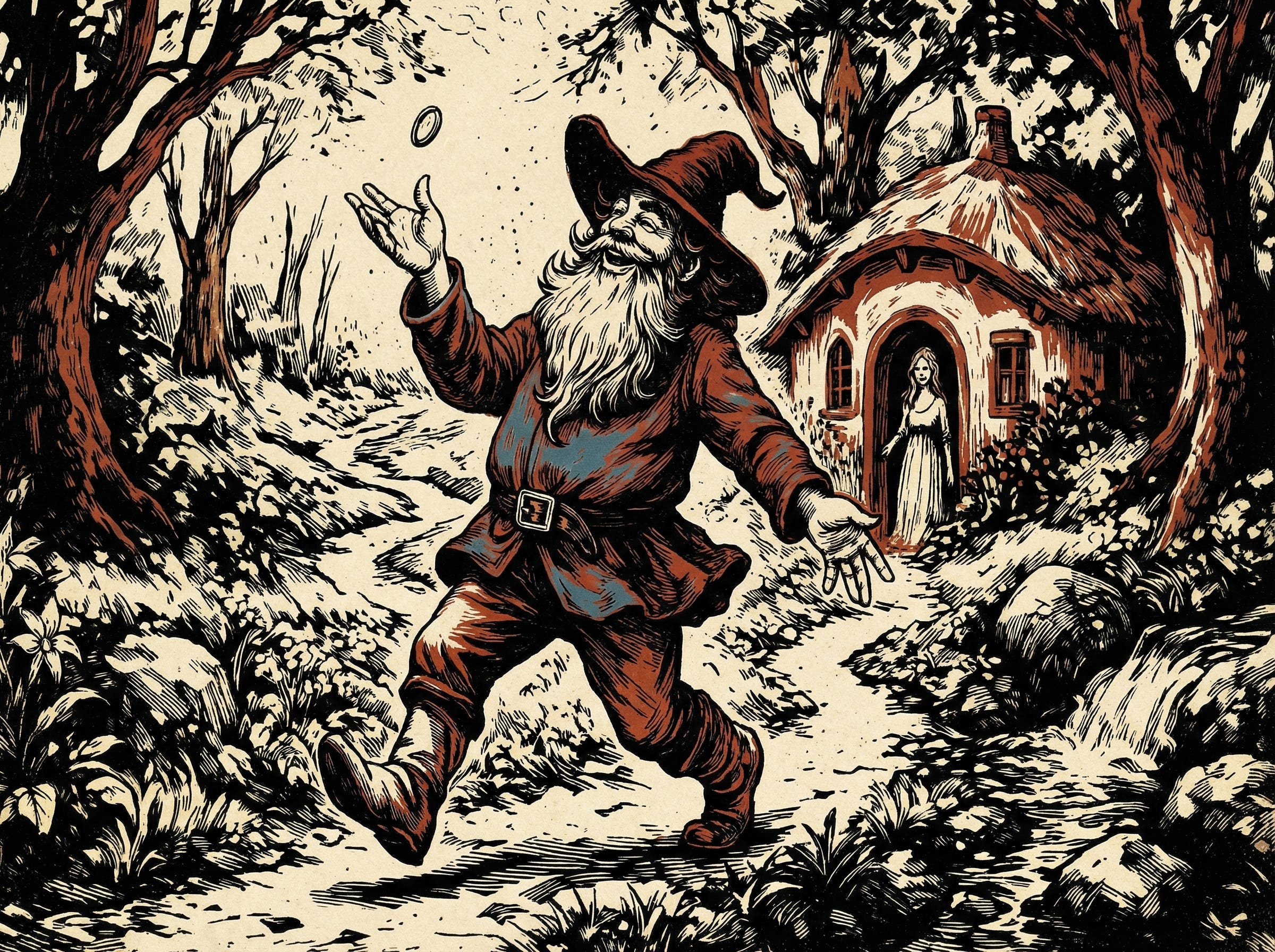
I recently read a short piece by The Culturist arguing that Tom Bombadil—the enigmatic, singing hermit that Peter Jackson cut from his Lord of the Rings films—reveals something essential about resisting evil.
The article surfaces a fascinating letter Tolkien wrote in 1954, explaining that Tom is immune to the Ring because he has “renounced control” and takes “delight in things for themselves without reference to yourself.” To Bombadil, the most dangerous object in Middle-earth is simply... a ring. The possibilities of power are irrelevant to someone who isn’t grasping for anything.
It’s a beautiful insight. But it left me with a question that the article doesn’t answer: Is Tom’s freedom available to us? Or is it just a picture of something forever out of reach?
I am not Tom Bombadil. Neither are you. Neither is anyone who has felt the pull of prosperity, prestige, or power whispering that we need just a little more to finally be okay.
So let me take Tolkien’s insight somewhere The Culturist didn’t go—into Scripture, into the nature of Christ, and into what I think is the only path to the freedom Tom represents.
Here’s what makes Tom so strange: the Ring has no power over him whatsoever.
When Frodo hands Tom the One Ring—the weapon that corrupts everyone who touches it, the object that bends the will of wizards and kings—Tom puts it on like a party trick. He doesn’t disappear. He makes the Ring disappear instead, then pulls it from Frodo’s ear with a laugh.
At the Council of Elrond, when the wisest beings in Middle-earth debate what to do with the Ring, someone suggests giving it to Bombadil for safekeeping. Gandalf dismisses the idea—not because Tom would be corrupted, but because he’d probably lose it. He might forget about it entirely. To Tom, the most dangerous object in existence is simply... a ring.
So who is he? What kind of being is immune to the seduction that captures everyone else?
When Frodo asks Goldberry this question directly, her answer is strange: “He is.”
That’s it. Not “He is a wizard” or “He is a spirit.” Just: He is.
It echoes something ancient. Something we’ve heard before.
What Tolkien Actually Said
In 1954, Tolkien wrote a letter that pulls back the curtain on Bombadil’s meaning:
“The story is cast in terms of a good side, and a bad side, beauty against ruthless ugliness, tyranny against kingship… but both sides in some degree, conservative or destructive, want a measure of control. But if you have, as it were, taken a ‘vow of poverty’, renounced control, and take your delight in things for themselves without reference to yourself… then the questions of the rights and wrongs of power and control might become utterly meaningless to you, and the means of power quite valueless.”
Read that again slowly.
Tom is immune to the Ring because he doesn’t want what the Ring is selling.
The Ring works by amplifying desire. It finds whatever you’re already reaching for—security, significance, control—and whispers: I can give you that. I can make you safe. I can make you powerful. I can make you someone who matters.It corrupts by promising to fulfill what you already crave.
But Tom has “renounced control.” He takes “delight in things for themselves without reference to yourself.” The possibilities of what could be achieved through the Ring’s power are, to him, simply irrelevant. He already has what he wants. He’s already home.
The Ring offers nothing to someone who isn’t grasping for anything.
When I read this, something in me ached.
You’ve heard me confess my own grasping before—the panic that preceded prayer, the 2 AM spreadsheets, the idols exposed when everything collapsed. You know I am not Tom Bombadil. Neither are you. Neither is anyone who has felt the pull of prosperity, prestige, or power whispering that we need just a little more to finally be okay.
So here’s the question that haunts me: Is Tom’s freedom available to us? Or is it just a beautiful picture of something forever out of reach?
Figures Without Genealogy
There’s a moment in Genesis 14 that has puzzled readers for millennia.
Abraham has just won a great battle. He’s returning with the spoils of war. And suddenly, without introduction or explanation, a figure appears: Melchizedek, king of Salem, priest of God Most High.
He has no backstory. No genealogy. No explanation of where he came from or how he obtained his priesthood. He simply is—blessing Abraham, receiving his tithe, and then vanishing from the narrative as mysteriously as he appeared.
Centuries later, the author of Hebrews reflects on this strange figure: “He is without father or mother or genealogy, having neither beginning of days nor end of life, but resembling the Son of God he continues a priest forever” (Hebrews 7:3).
Resembling the Son of God.
Melchizedek isn’t Christ. But he images Christ. He’s a type—a figure whose very mysteriousness points forward to something greater. His appearance in the narrative awakens a question: Who is this? Where does this come from? What reality does this shadow point toward?
And the answer, when it finally comes, is Jesus.
I think Tom Bombadil functions the same way—not in Scripture, but in Tolkien’s imagination.
“Oldest and fatherless,” the Elves call him. “He is,” Goldberry says. He appears without explanation, immune to the corruption that touches everyone else, delighting in existence itself. He’s not God—Tolkien explicitly denied this. But he resembles something. He images a freedom that exists fully somewhere else.
I’m not claiming Tolkien intended this parallel, or that Tom is a biblical type in the way Melchizedek is. But Scripture gives us a category for mysterious figures who awaken longing for Christ—and Tom fits that shape. He’s a literary Melchizedek. A figure without genealogy who stirs something in us that only the gospel can satisfy.
And just as Melchizedek points to Christ, Tom points to Christ.
The freedom we ache for when we read about Tom—the immunity to grasping, the pure delight in being—exists. It’s real. But it’s not found by imitating Tom. It’s found in union with the One Tom resembles.
The One Who Was Truly Immune
After forty days of fasting in the wilderness, Jesus was hungry. Genuinely, physically depleted. And Satan came to Him with three offers.
“Command these stones to become loaves of bread.”
This is the whisper of prosperity. Secure yourself. Provide for yourself. You have needs—meet them. Why depend on the Father when you have power to guarantee your own provision?
“Throw yourself down, for it is written, ‘He will command his angels concerning you.’”
This is the whisper of prestige. Prove yourself. Make a spectacle. Force God to validate you publicly. Why rest in quiet sonship when you could have visible, undeniable significance?
“All these I will give you, if you will fall down and worship me.”
This is the whisper of power. Control the outcome. Take the kingdom now. Why walk the slow path of suffering when you could have dominion immediately?
The Ring’s offer, made explicit. Prosperity, prestige, power—the three great grasping movements of the human heart, offered directly to Christ.
And He was immune.
Not because He didn’t have needs. He was starving. Not because the kingdoms wouldn’t be useful. He came to claim them.
But because He already had what Satan was promising.
His provision came from the Father. His identity was already secured—”This is my beloved Son, in whom I am well pleased,” spoken before He performed a single miracle. His dominion was legitimate, received in relationship, not grasped through rebellion.
Satan’s offers were counterfeits of things Christ already possessed.
The Ring was powerless because Christ wasn’t grasping. And Christ wasn’t grasping because He was held.
The Love Before All Worlds
Here is where I need to stop strategizing and start worshipping. Because what I’m about to describe isn’t a technique. It’s not a mechanism. It’s not a principle to apply or a practice to implement.
It’s the most beautiful reality in the universe.
Before the foundation of the world—before creation, before time, before anything existed except God Himself—there was love. The Father loving the Son in the Spirit. Perfect, infinite, joyful love. Not lonely divine solitude, but eternal communion. The Son, eternally begotten, eternally delighted in. “You are my beloved. In you I am well pleased.”
This is what theologians call the inner life of the Trinity. And it matters for us because of what happened next.
In Christ, you have been brought into that love.
Not as a spectator. Not as an afterthought. But as a participant.
“As the Father has loved me, so have I loved you. Abide in my love.” (John 15:9)
Do you hear what Jesus is saying? The love the Father has for the Son—that eternal, infinite, unshakeable love—that is how Christ loves you. The same love. Not a lesser version. Not a human approximation. The very love that has existed from before all worlds, the love that is the foundation of reality itself.
That love is now yours.
This is union with Christ.
Not a doctrine to affirm, though it is doctrinally true. Not a feeling to manufacture, though feelings may come. It’s a real change in your standing before God and your relationship with Him. You are in Christ. Not absorbed into Christ—you remain you, a creature loved by your Creator, a distinct person held by the eternal Son—but so united to Him that what is His becomes yours by grace. His righteousness credited to your account. His belovedness now your belovedness. His inheritance now your inheritance.
“See what kind of love the Father has given to us, that we should be called children of God; and so we are.” (1 John 3:1)
We are. Not “might become.” Not “could earn.” Not “should strive for.”
We are.
Christ is the eternal Son by nature. We become children by adoption—grafted in, brought near, welcomed home. The distinction matters: He is Son from eternity; we are sons and daughters by grace. But the love we receive is no less real for being given rather than owed. The Father looks at us in His Son and is well pleased.
Why the Ring Loses Its Power
Now do you see why the counterfeits lose their appeal?
The Ring whispers prosperity: You need more to be secure.
But in union with Christ, you are already held by the One who owns the cattle on a thousand hills. Your Father knows what you need. He clothes the lilies. He feeds the sparrows. And you are worth more than many sparrows. Security isn’t something you need to grasp—it’s something you’re already wrapped in. You are held, and nothing can snatch you from His hand.
The Ring whispers prestige: You need to prove yourself to matter.
But in union with Christ, you are already the beloved. Before you performed, before you achieved, before you produced anything of value—the Father said of you, in Christ, “This is my child, in whom I am well pleased.” Not because of what you’ve done but because of whose you are. You bear the image of God. You have been bought with blood. You are seated with Christ in heavenly places. What validation could the world offer that would add anything to this?
The Ring whispers power: You need to control outcomes to be safe.
But in union with Christ, you are held by the One who works all things according to the counsel of His will. Not a sparrow falls apart from Him. The very hairs of your head are numbered. Your times are in His hands. What control could you grasp that would make you more secure than resting in the sovereignty of the God who loved you before you existed?
The Ring is powerless over those who are already full.
This is Tom’s secret, finally explained. This is what Goldberry’s “He is” points toward. Tom images a creature so properly ordered toward delight, so content in being, that grasping has never taken root. But Tom is just a shadow.
Christ is the reality.
And in union with Him, His contentment becomes yours. Not because you achieved it. Not because you practiced hard enough. But because when you are in Christ, everything that is His becomes yours.
His righteousness. His inheritance. His belovedness.
His freedom.
Being Beheld Into Freedom
There’s a moment in John 21 that wrecks me every time I read it.
Peter has denied Jesus three times. Then Jesus died. Then Jesus rose—and Peter, not knowing what else to do, went back to fishing. Back to his old identity. Back to what he was before Jesus called him. He’s out on the boat when Jesus appears on the shore and calls out to cast their nets on the other side.
They catch an impossible haul. Peter recognizes Jesus, throws himself into the water, and swims to shore.
And what does Jesus do? He doesn’t rebuke. He doesn’t demand an apology. He doesn’t make Peter grovel.
He cooks him breakfast.
Then, three times—once for each denial—He asks: “Simon, do you love me?” Peter is exposed. His failure is named, gently but completely. He knows that Jesus knows. There’s nowhere to hide.
And Jesus says: “Feed my sheep.”
Fully known. Fully loved. Recommissioned on the spot.
This is how transformation actually works.
We don’t become free from grasping by trying harder to let go. We become free by being so held, so known, so loved, that our grip gradually relaxes. Not through effort but through exposure. Not through discipline but through being beheld.
“We love because he first loved us.” (1 John 4:19)
The order matters. His love comes first. Our love—and our freedom—is response.
“And we all, with unveiled face, beholding the glory of the Lord, are being transformed into the same image from one degree of glory to another.” (2 Corinthians 3:18)
Beholding. Not striving. The transformation happens as we look at Him.
This doesn’t mean grasping disappears overnight. The old reflexes remain. You’ll still feel the pull—the tightening in your chest when revenue drops, the compulsion to check your metrics one more time, the whisper that you need to prove yourself or secure yourself or control something. The Ring’s voice doesn’t go silent just because you’ve been united to Christ.
But now you have a place to stand when the pull comes. Not in your own resistance—that was never strong enough anyway—but in His hold on you. You can name the grasping for what it is. You can cry out for grace. You can return, again and again, to the reality of your belovedness. The freedom is real, even as it’s being worked deeper into you, from one degree of glory to another.
This is why practices like Sabbath, generosity, stillness, and confession matter—but not the way we usually think. They’re not techniques for manufacturing freedom. They’re not steps to achieve union with Christ.
They’re how we position ourselves to behold.
You rest on Sabbath not to earn trust but to rehearse trust—to spend a whole day practicing the truth that your provision doesn’t depend on your productivity, because your Father gives you everything you need.
You give generously not to achieve security but to celebrate security—to act out the reality that you’re already rich in Christ, that your treasure is in heaven, that you can hold earthly wealth with open hands because you’ve already received the inheritance that matters.
You practice stillness not to create peace but to remember peace—to quiet the noise long enough to hear the voice that has always been saying “You are my beloved.”
You confess in community not to earn acceptance but to experience acceptance—to find that when you stop performing and let yourself be known, you are loved anyway, because that’s how Christ loves.
The practices are not the mechanism. Christ is the mechanism. The practices just help us pay attention.
And as we behold, we are changed. Not into passivity—those who truly see Christ become the most active people in the world—but into action that flows from fullness rather than emptiness. We work, but not to earn. We serve, but not to prove. We build, but not to secure ourselves. The beholding doesn’t produce inertia. It produces freedom to act without grasping, to labor without anxiety, to pour ourselves out because we’re being continually filled.
A World About to Be Tested
I’ve been writing for months about a post-labor economy. About AI displacing jobs. About productivity-based identity being exposed as the idol it always was. About the coming crisis when “what do you do?” no longer has a satisfying answer.
That crisis is a massive Ring test.
For generations, the market has whispered a version of the Ring’s promise: Produce value, and you’ll be valued. Work hard, and you’ll be secure. Achieve enough, and you’ll be significant. Most of us have been shaped by these whispers so thoroughly that we don’t know who we are without them.
And now the old deal is breaking down. AI can produce. AI can achieve. AI can perform. The things that made you valuable to the market are becoming commoditized.
What happens when the Ring’s promises stop delivering?
Most people will grasp harder. They’ll chase whatever scraps of productivity-identity remain. They’ll perform more desperately. They’ll clutch at control as control slips away. They’ll cling to the Ring even as it destroys them, because they don’t know any other source of security or significance.
But those who are in Christ?
They’ve already been given what the Ring only promises.
When the market says “You’re not valuable,” they’ll know it’s lying—because their worth was established at creation and confirmed at the cross.
When productivity can’t deliver identity, they’ll still know who they are—because their life is hidden with Christ in God.
When control slips away, they’ll still be at peace—because their security never depended on their grip in the first place.
The Ring will be powerless. Not because they’re stronger. Not because they’ve mastered the right techniques. But because they’re already held. Already loved. Already full.
They’ll be like Tom—not through imitation, but through union with the One Tom images.
The End of Grasping
At the end of The Lord of the Rings, after the Ring is destroyed and the war is won, Gandalf does something curious. Before returning to the Undying Lands, he goes to visit Tom Bombadil.
“I am going to have a long talk with Bombadil: such a talk as I have not had in all my time.”
Gandalf has spent the entire story doing. Guiding. Fighting. Strategizing. Carrying the burden of responsibility. And now that the burden is lifted, the first thing he wants is to sit with Tom.
There’s something Tom has that even Gandalf longs for. A purity of delight. A freedom from grasping. Rest that isn’t just the absence of work but an entirely different way of being in the world.
Tom didn’t save Middle-earth. But Tom has something the saviors need.
Jesus said: “Come to me, all who labor and are heavy laden, and I will give you rest. Take my yoke upon you, and learn from me, for I am gentle and lowly in heart, and you will find rest for your souls.” (Matthew 11:28-29)
This is what He offers. Not just rest from exhaustion. Rest from grasping. Rest from the endless striving to secure yourself, prove yourself, protect yourself. Rest from being your own savior.
Come to Me, He says. Not “try harder.” Not “implement these practices.” Not “renounce control through spiritual discipline.”
Just: Come to Me.
Abide in Me. Remain in My love. Let yourself be held by the love that existed before the foundation of the world.
This is the secret of Tom Bombadil: there is a way of being in the world where the Ring holds no power. Where grasping gives way to receiving. Where striving gives way to rest. Where the counterfeits lose their appeal because you already possess the reality.
It’s not achieved. It’s received.
It’s not earned. It’s given.
It’s not found by imitating a fictional hermit. It’s found in union with the crucified and risen Christ, who loved you and gave Himself for you, and who invites you now—in this moment, before the storms come—to stop grasping and start resting.
The post-labor economy will test everyone’s source of identity.
In Christ, you’ve already passed the test.
Not because you’re strong enough to resist the Ring. But because you’re held by Someone who already defeated it.
Let that be enough.
Let Him be enough.
He is.
“As the Father has loved me, so have I loved you. Abide in my love.”
John 15:9