

Just Weights and Measures
I once set a price because I knew the buyer was desperate. The number was defensible. The scale in my hand was rigged — and I felt it tip.

I knew he was desperate before he said a word.
He’d told me his old vendor had folded mid-project, that his launch was three weeks out, that he had nobody else lined up. He needed what I sold, and he needed it now, and there was nobody to bid against me. I remember the small, cold calculation that happened almost without my permission: he’ll pay more than this is worth, because he can’t afford not to.
That’s the wolf’s nose. Nobody taught me to do it; the instinct comes free with the territory — the part of the predator that can smell a cornered animal and has learned to call the smell opportunity.
So I quoted high. Not outrageous. Defensible — I could have justified every line item to an accountant. But I knew, and I think some part of him knew, that the number wasn’t really a measure of the work. It was a measure of his cornering. I had priced his fear and called it value.
He paid it. He thanked me, even. And I closed the laptop feeling something I couldn’t name for a while — not guilt exactly, more like the sensation of a scale tipping somewhere just out of sight.
The Most Honest Object in the Ancient World
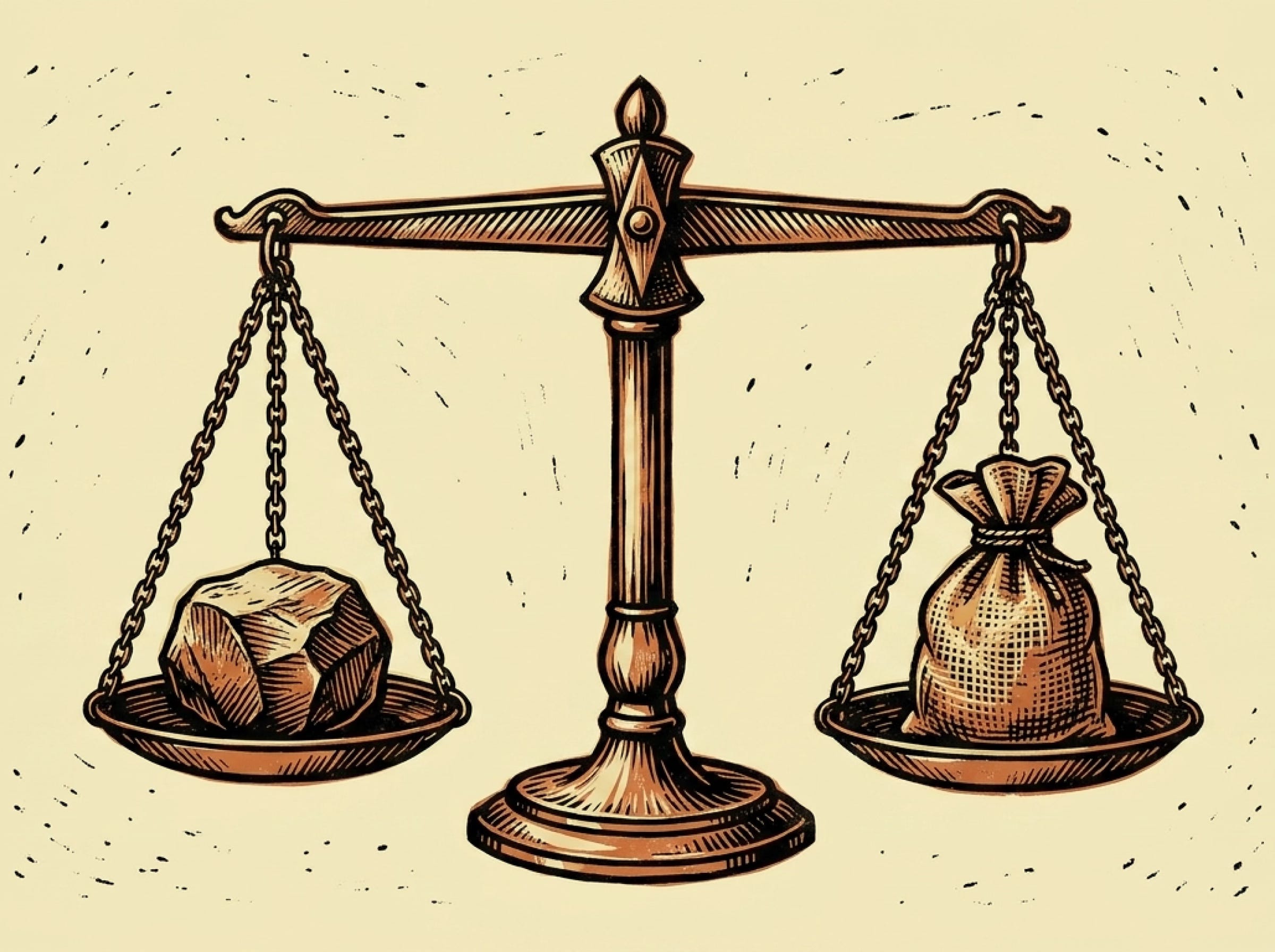
In the ancient marketplace, a merchant carried a bag of stones.
These were his weights. You wanted a pound of grain, he put the one-pound stone on one pan of the balance and poured grain into the other until they hung level. The whole transaction depended on one thing: that the stone actually weighed what he said it weighed. The scale couldn’t lie. But the stone could.
So the dishonest merchant carried two sets. A heavier stone for buying — so more grain poured into his sack for the same “pound.” A lighter stone for selling — so less grain left his sack for the same price. Two weights in one bag, and a friendly smile over the top of them. The fraud was invisible. The customer watched the pans hang level and walked away robbed.
Scripture is strangely, specifically furious about this.
“A false balance is an abomination to the LORD, but a just weight is his delight” (Proverbs 11:1). Not “is unwise.” Not “tends to backfire.” An abomination — the word reserved for the things that turn God’s stomach. And its opposite isn’t mere tolerance; it’s delight. God leans in over an honest scale the way you’d lean in over a child’s first careful, fair division of a candy bar.
It comes up again and again, more than you’d expect for something so mundane. “You shall not have in your bag two kinds of weights, a large and a small... A full and fair weight you shall have” (Deuteronomy 25:13, 15). “You shall do no wrong in judgment, in measures of length or weight or quantity. You shall have just balances, just weights” (Leviticus 19:35-36). And when Amos wanted to name the rot underneath a prosperous, religious, festival-keeping nation, he reached for the same image: merchants impatient for the Sabbath to end so they could “make the ephah small and the shekel great and deal deceitfully with false balances” (Amos 8:5).
Small ephah, great shekel. Give less, charge more. Rig the stone and smile.
Here is what I had not seen: my pricing is my weight in the bag.
Every price I set is a stone I’m putting on the scale, claiming this is what the exchange is worth. And God, who delights in just weights, is watching the pans hang.
The Modern Bag of Stones
We don’t carry stones anymore. We carry pricing strategy.
And the strategy has gotten sophisticated enough that you can rig the scale without ever feeling like a cheat. “Charge what the market will bear” — which is just an elegant way of saying find out how cornered they are and price the corner. “Value-based pricing,” which began as something honest (price by the good you create, not the hours you spend) and quietly mutated into price by how much they’d hurt to lose it. Anchoring. Decoy tiers built to make the real tier look reasonable. The “good-better-best” column engineered so almost no one chooses what’s actually best for them.
None of it is fraud the way a heavy stone is fraud. That’s exactly the problem. It’s all defensible. You can justify every number to an accountant. The ephah looks full. And the customer watches the pans hang level and walks away having paid for their own fear.
I’m not saying a price should ignore value. A just weight isn’t a low weight — it’s an accurate one. The merchant who undercharges to the point of starving his family isn’t righteous; he’s putting a false stone on the scale in the other direction, pretending the work is worth less than it costs to do faithfully. Justice isn’t cheapness. Justice is the price that tells the truth.
The Questions a Just Weight Asks
So how do you set a price that tells the truth? Not with a formula. The honest merchant didn’t need a formula; he needed to care whether the stone was true. But caring has to become concrete, so here is what the caring asks.
What value do I actually deliver? Not what they’d pay in a panic — what the thing is worth to a person thinking clearly. That’s the real stone. Start there, not at the ceiling of their desperation.
What does it cost to do this faithfully? The work has to sustain the worker. Fair wages, decent materials, time to do it well, a margin that lets you keep doing it next year. A price too low isn’t generosity — it’s a slow lie about what good work requires, and it usually ends with you cutting the corners you swore you wouldn’t.
Is this fair to both of us? A just exchange leaves both parties better off — that’s the quiet genius of honest trade, that it can bless both sides at once. The question that exposes the rigged stone is simple and uncomfortable: would I feel fine if they could see exactly how I arrived at this number? If the answer is no, you already know which weight is in your hand.
Can the people I’m called to serve actually afford it? Sometimes the just price and the reachable price diverge, and then you’re in the territory where the kingdom gets interesting — sliding scales, the quiet discount, the work done at cost for the one who can’t pay full, the Boaz move of leaving grain in the field on purpose. Not because the work is worth less, but because the neighbor is worth more.
And underneath all of them: what does my pricing teach about the God I claim to serve? Because it teaches something. Every invoice is a small sermon about whether the kingdom’s God is a generous host or a clever extractor. Your customers are doing theology off your price tag whether you mean them to or not.
The Scale That God Stepped Onto
I said God watches the pans hang. That’s true, but it’s not the deepest thing.
The deepest thing is that the God who delights in just weights did not hold Himself at a just weight when it came to us.
“For you know the grace of our Lord Jesus Christ, that though he was rich, yet for your sake he became poor, so that you by his poverty might become rich” (2 Corinthians 8:9). Put that on a balance and watch it refuse to hang level. He poured out everything; we brought nothing to the pan. The most lopsided transaction in the history of the universe, and the imbalance ran entirely in our favor. He gave the full measure — pressed down, shaken together, running over — and charged us the empty sack.
That is the God standing over your scale. Not a divine auditor hunting for a thin ephah to punish, but the One who already overpaid for you so extravagantly that the books will never balance and He never wanted them to. When you set a just price, you are not appeasing an accountant. You are imaging a Father. You’re saying, with a number on an invoice, the God I serve does not shortchange people, and neither will I.
And when you refuse the rigged stone — when you quote the desperate man the same fair number you’d quote a friend — you are preaching the gospel in the one language the marketplace can’t dismiss as religious talk. You are showing him a God who deals honestly.
What It Costs and Why It’s Worth It
I’ll be honest about the receipt.
The just weight costs money. There is real revenue in the cornered customer, the anchored tier, the decoy column. Renounce it and a competitor will collect it. You will leave money on the table — money you could use, money that was right there, money no accountant would have flagged. That’s not a hypothetical. That’s a line in a budget that didn’t get filled.
I can hear the objection, because I’ve made it: isn’t “what the market will bear” just how prices work? Am I supposed to apologize for being good at this? And the answer runs in two directions. No — you don’t owe an apology for charging what faithful work is genuinely worth. Underpricing yourself into resentment and ruin serves no one and dishonors the work. But also yes — there is a difference, and you feel it in your chest when you cross it, between pricing the valueand pricing the vulnerability. One puts a true stone on the scale. The other reaches into the bag for the heavy one and hopes God isn’t the kind to check.
He is the kind to check. And He delights when the weight is true.
I never made that quote right. The project’s long done; the man’s moved on; he probably never thought about it again. But I did. And the next time someone came to me cornered and out of options, I quoted the number I’d have quoted his unhurried, well-resourced twin — and felt the scale, for once, hang level under a God who was glad.
That’s the whole of it, really. Reach into the bag. Pull out the true stone. Set it on the scale where the only Auditor who matters is already smiling.
A just weight is his delight. Let your pricing be something He delights in.
Look at your last price. Did you weigh the value — or the vulnerability?
Subscribe to receive reflections on faithful business in a predatory marketplace.
This really landed for me. I especially appreciated the distinction between pricing value and pricing vulnerability. As someone who has spent time in both service-based businesses and personal development spaces, I've seen how easy it is to justify almost anything when it's wrapped in "the market will bear it."
Nearly every article you publish, I read while nearly jumping up and down and shouting “YES bro 🙌🏻🔥”.
(And the only reason I don’t actually jump and shout is because then I couldn’t keep reading lol)
GEM stones in this one, brother!
“A just weight isn’t a low weight — it’s an accurate one. The merchant who undercharges to the point of starving his family isn’t righteous; he’s putting a false stone on the scale in the other direction, pretending the work is worth less than it costs to do faithfully. Justice isn’t cheapness. Justice is the price that tells the truth.”
I am so thankful for you sharing your stories, Joshua. Your honesty and candidness about this particular topic is so refreshing, and the way you so clearly connect your experience back to the scripture.